Pages

Sunday, January 17, 2010

Stylin' Series Sews & Shops for Valentine's Day

It's not too early for Valentine's Day if you need to sew and order accessories.

If time & money were no concern, I'd dress like this for dinner:


las frambuesas mexican cocoa ruby dangle earrings from etsy seller jennifermorrisbeads. I featured her earrings previously here where a whole outfit was planned around the earrings, they inspired me so. Someday, I will bite and buy. The jewelry and descriptions are drool-worthy. It hurts to look at what's sold, knowing others own these beauties. Check her store out. It goes without saying, this outfit started with the earrings, then I shopped for fabric ...

... and found rayon jersey in deep red at Gorgeous Fabrics. Looks like Chianti, Merlot, Syrah, Cabernet Sauvignon ... pick your favorite red ... romantic and yummmmmmmmmm!

Sew it into a drapey top with Jalie's Knit Scarf-Collar Top, with sleeves or sleeveless. So you don't need a necklace. Let those earrings shine. And the scarf will play up the vertical drop of the earrings.

Wear it with a black skirt or pants you already own.

Add an antique gold clutch from Nordstrom to hold lipstick so you're ready for Valentine kisses, and Elie Tahari old gold sandals from Zappos.

Saturday, January 16, 2010

Making & Using Ribbing As Shaping & Design Element

Some of this post repeats what I posted previously about sewing ribbing, when I made ribbing for the Hot Patterns Slinky Shrug.

Close-up of the ribbing:


First, excellent resources with tips about sewing ribbing:
-- The Sewing Divas tell how to sew your own ribbing.
-- Connie Long's "Sewing With Knits" book has a section with tips
-- Threads magazine Twin-Needle Reference Chart showing how to get various effects

You will be sewing with a twin needle, so your machine will need ability to do zigzag stitching. Here are resources for twin needle sewing:
-- The basics of twin needles from Sewing and Craft Alliance (PDF doc)
-- Twin-needle stitching article at BurdaStyle

Have extra twin needles on hand. I did not have extras while working on a large project requiring hours of twin needle stitching. I was using a stretch twin needle, 4.0 millimeter width, and it broke. I had only smaller millimeter stretch twin needles on hand. So, an emergency trip to JoAnn ensued, but they did not have stretch 4.0 twin needles in stock. So I got a universal 4.0 twin needle so the ribbing would be the same width. Unfortunately the twin needle kept skipping stitches on the old cotton jersey T-shirts I was sewing. Lots of skipped stitches. Really bad. UGH! So I rooted through my notions and found a denim 4.0 twin needle. Thankfully it worked fine on the cotton jersey.

Sewing ribbing consumes a great deal of thread. Just like starting a business, where they tell you however long you think it will take and however much you think it will cost, double the estimates ... I learned that doubling the thread you think you will need will help you avoid unnecessary trips. Unless your thread source is close by. You'll see a spool of woolly nylon here. I use woolly nylon in the bobbin to add stretch to the ribbing.


Get good thread such as Gutermann or Metrosene. For a big ribbing project where I needed black thread, I was thrilled to think I could use up a bunch of $1 sale Coats thread that I'd had on hand for many years. Use it and get rid of it! Cheap! Joy! Well, well, well ... the threads kept twisting and knotting together before going through the twin needle, and I could see a great deal of thread dust and fraying happening. This caused the threads to break frequently, bringing frequent interruption in the middle of a nice line of ribbing, causing me to have to rip out lines of stitching and rethread the needles. Then it would happen again. By the fourth nasty entanglement, with very little productive sewing time between entanglements, I gave up on the $1 spools and loaded the machine with a Gutermann and a Metrosene from my thread rack. The thread flowed like a smooth river through the needles and through the fabric, and sewing line after line of ribbing was a serene exercise after that thread change. Not a single tangle. Very zen.

This experience reminded me of a post on Stitcher's Guild years ago where someone showed extreme close-ups of various threads. The picture showed all the frayed pieces on Coats threads, versus the smooth finish of other threads. At the time, I honestly was skeptical that thread could make such a difference. But I could see this happening with my project, it's like the fraying of the Coats threads were getting hung up and stuck on each other. So save yourself the grief and the time, and from the beginning choose your thread carefully.

The reverse side of ribbing looks interesting too. Here are both sides of old t-shirt fabric with ribbing samples. Depending on the look you're going for, either side could be used.

"Right" side:


"Wrong" side:


Tunneling is A-OK. The great thing about sewing ribbing is that while tunneling is frustrating when twin stitching the hem of a knit top, and you must problem-solve to eliminate it, tunneling is exactly what you want with ribbing. I set the tension on the highest possible setting to make the ribbing as visible as possible. But you can experiment with various tension levels for different effects. This effect is demonstrated on this "corrugated" coffee cup sleeve from BurdaStyle:


Although, you may not get massive ribbing like this -- there is cording underneath the ribs to make the corrugated effect more obvious.

Ribbing & pintucks create cool design elements and shaping. Here's ribbing used in a very different way on sleeves, from the same BurdaStyle article as the corrugated coffee sleeve above:


Ribbing isn't just for hems. As the above photo shows, you can be creative and use ribbing as a decorative and shaping element in many areas of a garment. Pintucking can produce a similar effect when there are lots of pintucks. The photos below shows an idea to shape the waist area, from a BurdaStyle article about restyling t-shirts with pintucks:


You can strategically use ribbing to make a garment fit closer and more shapely, as Connie Long explains in her book Sewing With Knits. Use ribbing to make a knit top fit closer over the bust and release fabric to fit looser over the hips as shown here:


Here's a little burst of ribbing for shaping on a knit top at eShakti:


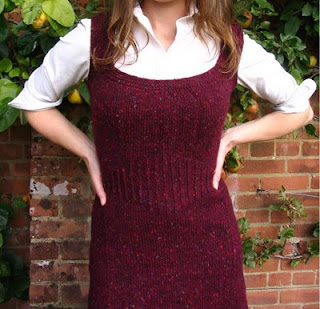
Here's waist shaping from a knitting pattern, but the concept could be applied to a sewn knit garment:


The above photos look like knits. Here's a similar effect with pintucks on a woven, on an Eileen Fisher silk tank from Garnet Hill:


You could choose thread colors that contrast with the fabric color to make ribbing even more of a design element, on right or wrong side of fabric. If you don't want thread to show so obviously, just choose thread in a close color and it may disappear into thicker knit fabric but will likely be visible when viewed closely on thinner knits.

If you're not sure about shaping a garment for the human body, try ribbing fabric for a pillow or other home accessory. Or, a scarf.

Use ribbing effects to texture fabric. Threads magazine has an online article showing how to get various ribbing effects with twin needles, resulting in fabric textures like this garment from Kayla Kennington:


Most of all, have fun! It does take patience to sew many lines of ribbing, but I find it very meditative. Surprising, as I'm not the most patient person on the planet.

EDITED TO ADD: If you don't want to sew, here's a beautiful silk ribbed fabric at EmmaOneSock:


It would make something similar to the Eileen Fisher tank shown above.

Saturday, January 9, 2010

Stylin' Series Desperately Searches for Spring

Winter just recently arrived full force, but I'm over it already. I mean, the gardening catalogs are coming now. It's time to plan for spring. And, this sunny totebag. And what I'd sew to wear with it.


Tote from Hayden Harnett which I'd never heard of  before, but glad I tripped on this site through blog surfing today. Edited to add: Keep eye on the price. This tote goes on and off sale, at different sale prices.

Silk fabric from Fabric Mart for a tank top to wear under jacket. Bubblegum4Breakfast used this silk as lining in a coat. It's beautiful!

Tank pattern is BurdaStyle Sadie.

Fabric for jacket is Relish Tweed from Sawyerbrook.

Jacket pattern is BurdaStyle Jorinde Jacket.

Pants from Anthropologie.

Refashioned boots from etsy seller. They are old Candie's boots cut out to make them into gladiators. I absolutely hated the gladiator look until recently. I guess they make you look at something long enough, it eventually grows on you. What more obvious consumer trend to make us buy short-term impractical stuff during a recession than design something that looks like nothing that people already have in their closets, so trend slaves will spend money to buy this ugly trend. I'm not a trend slave, so I'd never really buy these. I'm just exercising my style eyes on a Saturday afternoon. And my eyes are bored by plain old boots and plain old shoes. But I think I could live with these boots because they already existed and they're refashioned, and they'd only peek out from under the pants. Alas, they're not my size, so if they are your size, they're yours.

I like the idea of bringing these casual pieces together, some with loud elements, with a Ralph Lauren-ish tweedy jacket to tone it all down a bit and bring some contrast. Indeed Sawyerbrook says the tweed fabric is from Ralph Lauren. And because I love silk, I will wear silk mixed in a casual outfit. What's the problem with that. It's not like I'm sweating while playing basketball in this outfit or something like that.

Wednesday, January 6, 2010

Quick, Pick Me Up!

So, no sew today. Tired. Recent workdays have been spent reading about neurobiology when my public health/injury prevention background is anything but that! Some of it has been a very fascinating trip, such as reading about the potential addictive qualities of texting, email, twittering, surfing sewing blogs, heh. It's been a lot of screen reading and my eyes are shot. I can barely focus to thread a needle. Unfortunately now I must sew lots and lots of ribbing lines for a project which entails threading twin needles! Oh forget it tonight.

My eyes need a break, a quick pick me up, something bold and easy to see. Such as this black and cream paisley floral knit from Gorgeous Fabrics, which I actually own and it's on the short list to sew. It's so soft and will make the most comfy long tunic. If you want it, run to Gorgeous Fabrics; it's on the Hot list in short supply now. Here's what I'd sew and wear with it:


  • Pattern: New Look 6731, view D cut a little longer to be short dress length.
  • Cream color coat from Nordstrom, which I'd never wear in real life, would get dirty too easily and it's pricey for something that would get damaged so obviously, so easily.
  • Verrrrrrrrrrry interesting boots from Zappos, which I'd also never wear in real life because DIRTY STUFF SPLASHES in midwestern cities in the winter. And for the price of these boots, no splashes! Not even a pencil dot speck of a splash! Other than that, they feel very severe, but I'm strangely attracted to them because I want to pull the zipper and see what's under there.
  • Black tights, from any ol' place, as long as the color is even and very opaque.
  • Handbag from 6pm.com, because the boots and coat will get splashed and dirty, might as well have an expensive handbag that will get splashed so it will all match. There is method to this madness.
  • Hat from 6pm.com, because mom always told me to wear a hat when it's cold out. You didn't think I'm completely impractical?
  • Vintage bone and shell bangles, from etsy seller badbabyvintage.

Monday, January 4, 2010

Burda WOF 05-2008-101

I know Burda changed its name but it's still Burda WOF to me. Thus I sewed Burda WOF 05-2008-101:


Oh goodness. Terrible photo. It's actually the best I have, for now. Had to photograph quickly while my husband was loading the car, with the engine running to warm it up, before we left my parent's house for our long drive back to Chicago. I forgot until last second that I took pieces to photograph because my camera was so rudely stolen.

Of course the front doesn't collapse all concave as in the photo; it actually blouses just as dramatically in the other direction over the chest. A little too much, as other reviewers on PatternReview have commented. And the pocket flaps do lie nice and flat when wearing this, and the buttons don't fall over like in the photo. If they did, believe me, I wouldn't photograph and share this! All bad photo apologies out of the way, let's get down to review business:


Pattern Description
Long-sleeve jacket with peplum and center front zipper.

Pattern Sizing
Size 36-44 included in the magazine.

Did it look like the photo/drawing on the pattern envelope once you were done sewing with it?
Yes, except I skipped a few details discussed below.

Were the instructions easy to follow?
I didn't pay much attention to them. I skipped details like interfacing, zipper and sleeve tab, so I just followed instincts to assemble the jacket in the right order.

What did you particularly like or dislike about the pattern?
I discovered the same issue other reviewers did -- the jacket is a little blousy to be flattering. I knew this before sewing it, but I still made it because I liked its details and I like the peplum. I added a third set of darts at the neckline to try to tame some strange droopy-drapiness there. As other reviewers did, I topstitched the visible darts to add a bit more detailing.

Fabric used:
The fabric is a viscose blend with metallic bronze finish from EmmaOneSock. It has a slightly faux leathery look to it too. There's a bunch left to make something else. I was originally planning to make a fantastic metallic trenchcoat and wish I had enough fabric left to make one. Someone please make a trench with this! But I wanted a dressy jacket to wear over a dress for an evening event back in October, and this is the fabric that was right to wear. This project started with the fabric. But nothing among my jacket patterns clicked. So I flipped through 5 years of Burda WOFs and this pattern clicked immediately.

To go with the fabric, I made a bracelet exactly like the bracelet below from Sundance catalog to wear with the jacket:


Pattern alterations or any design changes you made:
I skipped several details: interfacing, the zipper and the sleeve tabs. I also topstitched the darts.

Would you sew it again? Would you recommend it to others?
Yes, because this version is dressy and few will see it, I plan to sew it again with a tweedy navy wool to wear to the office.

More photos:
Here's the back, a bit wrinkled from wear. As you can see, I skipped the sleeve tabs:


Here is pocket detailing, of course with wonky seams because this jacket didn't want to cooperate for nice photos. I don't see wavy seams in real life. Or do photos show us things we can't otherwise see? Um, I shudder at the thought. I actually had these buttons in my stash and they matched this fabric well. They also help to keep the faux pocket flaps secured to the peplum, otherwise the flaps would flop around a bit.


Hong kong seam detail. The reverse side of this fabric is nice and contrasts well with the metallic outer side, so I wanted it to be visible and not hidden by lining.


Parting shot:


We lost a sewing assistant for a long while on Christmas Eve. We couldn't find him anywhere. I thought he got lost in the bowels of the basement of my parent's house again. He loves it down there. He didn't even come when called. (Believe it or not, both my cats usually do. They love me.) Finally I looked hard under the Christmas tree. I had looked there before, but he kind of blended in under there! This is what he does in my gardens too. He tucks himself under big hostas and watches the world from there. I am thankful both cats were very gentle with my parent's Christmas tree and all its breakable ornaments.

Saturday, January 2, 2010

How To Reorganize Your Closet So You Wear More

What % of  your clothes do you wear?

I estimate a pathetic number -- 10%!!

What's more pathetic -- there's about 20 feet of crammed rack space in my closet. The clothes I actually wear are hanging on a mobile clothesrack, taking up space on our bedroom floor, which I stub my toe on frequently. And the clothes catch cat hair. This picture is so wrong!

These unworn clothes cost money. I buy clothes often. I certainly buy fabric frequently. Yet I feel like I wear the same 5 things every week. In fact, I pretty much do. There's something very wrong with that.

Are you in a similar situation???

Clean the closet. Take stock. Be conscious of the patterns developing as you clean, and analyze what those patterns mean. Here are the steps I took:
  1. Made 6 signs and placed them on the empty guest room floor:
    1. KEEP - FITS NOW
    2. KEEP - TOO SMALL
    3. KEEP - SMALL REPAIRS
    4. KEEP - REFASHION (SEW)
    5. SELL
    6. DONATE
  2. I started to take all clothes out of my closet and stack them neatly in piles on the floor by the appropriate sign. I didn't worry about wrinkling the clothes because I was careful and they won't stay there long.
  3. However I stopped piling clothes when I realized a huge amount was going under KEEP - TOO SMALL and I'd build a mountain. So instead, I moved all those clothes to one area of the closet. Ordinarily I'd recommend to be realistic and sell or donate the too-small clothes. However I purchased most of these clothes only 3-5 years ago after I lost weight and got back to the size I wanted to be. I stayed there for a few years. Then we vacationed in Italy and I ate and ate and ate and never stopped eating after we got back home. I love good food. I won't be shy about it. But it's time to get motivated to fit in all these clothes again. About 15 pounds should do it. Seeing this enormous amount of clothes, some still with tags on them, and thinking of what I paid, it makes me feel sick. I won't make a resolution because I don't believe New Year's resolutions motivate me. I am just finding my natural motivation.
  4. Nearly all the KEEP - FITS NOW still fit on the mobile clothesrack. That's why they wound up there in the first place. Those are going back in the closet in the easiest section to access. The mobile clothesrack is moving out of the bedroom!
  5. The KEEP - SMALL REPAIRS and KEEP - REFASHION (SEW) are going down to the basement sewing room. What's the difference? Small repairs are holes to fix, pants and sleeves to shorten. Waistbands to take in. Refashion are more creative projects. There's a big pile of sweaters that could be reshaped from boxy to curvy. Or cut apart and pieced together in different combinations. We'll see. If I decide not to refashion any items here, they should go into DONATE or SELL.
  6. DONATE - Because most of my clothes are pretty new and I made huge donations in past years before two separate inter-state moves, this pile is smaller this time. Also many DONATE items are Target or Walmart purchases. No Eileen Fisher here. Usually I would consider the more advantageous tax deduction of donating expensive brands, but right now I'd rather have cash than think about the tax bill in 2011. That's a conscious decision.
  7. SELL - These are the too-small clothes that I honestly won't wear again even as I do lose weight. It's disheartening to see this pile become so big. As I said above, be conscious of patterns as you assign clothes to categories. There are definite patterns here. Most are purchase mistakes.
Patterns in The Sell Pile
  1. Clothes not appropriate for my body shape. In particular, I put the jackets that just haven't felt right when I wore them in this pile. I didn't feel good in them. I fidgeted, adjusted, worried, shot dirty looks at myself when I caught my view in the restroom mirror at work. Ugh. They aren't cut to flatter a figure-8 shape. Many of them create bunches of wrinkles above my butt, and don't fit close enough around my waist. They make me look like a wide straight box. Not good. On someone else though, they may be just right.
  2. Beige and white jackets and blouses. As I'm now above 40 and I think my skin tone is changing, it's harder to wear beige and white next to my face. While I once looked more rosy in these colors, now I look tired. So out they go. I am keeping light pants, and light t's and tanks with lower-cut necklines that I wear under a jacket or sweater.
  3. Black pants. My wardrobe has been shifting more toward brown as a base color than black. I am keeping my favorite "too small" black pants for now, to wear as I lose weight.
  4. Cotton and lined linen pants. I definitely don't like brushed cotton pants, I now see. I don't like the cotton that crunches and swishes when you walk. Structured linen that's lined, like a few Talbot's pairs now in this pile, don't give enough. They fit OK when I stand but don't have enough ease when I sit. I think they may work for people with less curvy figures.
  5. Wide leg pants. This was a trend that didn't work for me. I'm too petite.
  6. Polyester clothes. I made some quick inexpensive polyester purchases when I quickly needed a number of new work clothes. Nearly all these things are now in this pile. I wore many of them only a few times.
  7. Colorful handbags. I tried to branch out into colors as accents. But bottom line, I like my handbags in browns and blacks and that's not going to change.
Patterns in the Keep Pile
  1. Browns and colors that go well with browns. I love mixing colors with various browns.
  2. Wool. I like wool pants and wool jackets -- crepe, flannel, worsted. Most are three season. Some are light enough for summer. I love wool. It always feels comfortable, and it gives enough to sit in it. I live in Chicago, so there's certainly a very long season when it can be worn.
  3. Colors. Blues. Reds. Olives. Other greens. I like to wear a brighter color with a basic pant in brown, black or gray.
  4. Simple shapes. Many of the structured, complex things with numerous pockets, etc. wound up in the sell pile. I'm 5'0" so simple seems to work better on me.
How to Wear More
Easy steps:
  1. Getting rid of the SELL and DONATE items clears space in my closet and helps me more clearly see what I do wear.
  2. Seeing the enormous KEEP-TOO SMALL section will motivate me and hopefully these items will soon be moving into the FIT section.
  3. Getting the FIT clothes back in my closet and all together in one spot helps me see new ways to combine them so I don't feel like I'm wearing the same 5 things every week. It also exposes obvious holes that I can easily fill by sewing fabrics from my stash. No new clothing purchases needed!!
  4. Because I thought very carefully about assigning clothes to piles, and noticed patterns as I assigned them, I now am aware of the patterns of what works for me and what doesn't. Buying and making only what works will help increase the percentage of clothes I actually reach for again and again.
I share these tips in hopes that they help you too!

Friday, January 1, 2010

Hot Patterns Slinky Shrug & Sewing Your Own Ribbing

I made the Hot Patterns Slinky Shrug (free download) out of teal blue wool knit. I made the matching ribbing from the same fabric.

Pattern instructions clearly tell you to choose a drapey knit or woven. And I did. This choice of fabric was a labor of love. I absolutely adore this color. The fabric was waiting for the perfect sweater to sew for me. However, I saw this shrug, and I saw it in this fabric, and I saw it for my mom. Thus the fabric was given away as a Christmas present. Maybe that's the best way to use the best fabrics. Indeed when my mom opened the gift, my sister exclaimed, "mom that's your color!" So it was meant to be.

Here's mom wearing her Hot Patterns Slinky Shrug:


I also made the necklace to go with the shrug. Necklace detail:


Most necklace supplies were from JoAnn, although the teal pearl strand was from Fire Mountain Gems and the locket is made by Extasia, purchased from Cambria Cove. It's hidden here, but there is a big gold decorative fastener that's set to be visible on the side instead of the usual back. I probably should have placed it lower, closer to the locket. But I also didn't account for wearing the necklace over a turtleneck, which pulls everything up higher. The seed beads and the pearls are actually two separate necklaces, designed to be worn together, but can be worn separate when my mom doesn't want this much "look."


Pattern Review (http://sewing.patternreview.com/review/pattern/46686)

Pattern Description: Shrug made from knit or woven. Instructions recommend using drapey fabric.

Pattern Sizing: Many sizes come on the downloadable PDF. Please don't make me look at all those 8.5x11 pages again! But I do remember it went up to a size 26. I made a size 16. There were numerous sizes smaller than this.

Did it look like the photo/drawing on the pattern envelope once you were done sewing with it? Mine did. But if you follow the pattern, your ribbing may be wider than the pattern envelope.

Were the instructions easy to follow? Yes, but I referred to them only briefly for order of construction. I didn't follow them closely letter-to-letter.

I depended heavily on The Sewing Divas blog to sew this, following the tips there for:

Printing the downloadable PDF pattern. I was careful to print 100%, no scaling, but the thing that can't be overcome is you lose page numbers/placement markings at the very edges of the paper. Future patterns would well serve users if Hot Patterns allowed for a 1/2" blank margin. So assembling this pattern was a frustrating puzzle. For me, the floor layout photos in The Sewing Divas post were critical to understanding how the pages fit together.

Sewing your own ribbing fabric. I knew that no way would I find ribbing to match this teal wool close enough for my satisfaction. While I have black and gray ribbing, I didn't want contrast. The Sewing Divas provide good directions. The post also mentions Connie Long's Sewing With Knits book, which I have, but wouldn't have thought to look for ribbing fabric directions there. So, thanks Sewing Divas.

Also, Hot Patterns size chart. The instructions don't include sizing.

What did you particularly like or dislike about the pattern? I liked how easy it was to assemble this, and all the pieces fit together well.

But I caution -- the ribbing pattern pieces produce ribbing much wider than the envelope drawing. I like the proportion of the envelope drawing, so I was planning to modify the ribbing pieces. As it turned out, I was forced to make the ribbing smaller anyway, because I had barely enough fabric to piece together enough ribbing. More on that below under "sewing ribbing."

I might prefer to pay to print a pattern at my local copy shop on big paper, rather than crawl around on the floor piecing small papers together. And at the same time, battling two sewing assistants who want to "help." (I would never think to banish my assistants from the room, no!) I reached a hopeless point before finding The Sewing Divas post which helped me find the right layout.

Fabric Used: A drapey wool knit. Substantial in feel, but still lighter-weight. Soft, no scratchiness. The perfect wool knit for tops. I don't remember where I got it, maybe Haberman's in Royal Oak, Michigan because most of my wool knits are from there. Sewing the fabric into a ribbing does increase the weight of the fabric significantly, though. So consider that if you plan to make your own ribbing.

Pattern alterations or any design changes you made: I made the ribbing thinner, not as wide as the pattern piece.

Would you sew it again? Would you recommend it to others?
Yes, I'd like to make one for me to throw on over a longer top for a less formal look at work than a jacket. This is a great gift pattern because when you don't know someone's exact size, you can err on a larger size and it is just seen as all the more warmer and cozier.


Sewing Ribbing

Ribbing detail:


It was hard to photograph the detail. In the photo, you can barely see the thread from the stitching. If you use well-matched thread, the thread nearly disappears into the fabric.

It took a long long loooooooong while to create the long length of ribbing. I used woolly nylon in the bobbin and a tight bobbin setting to make the ribbing stand up more, as described in Connie Long's Sewing With Knits book. I used the presser foot edge as a spacing guide. I would prefer closer ribbing, but this was the easiest quickest way to measure, and I had a lot of straight lines to sew, and also barely enough fabric.

Sewing ribbing consumed a great deal of thread. I eventually had to make two trips to JoAnn just for one more spool of thread. The ribbing took four smaller spools of Gutermann thread and my ribbing is smaller than the pattern pieces.

Not only does making ribbing chew up thread, it consumes fabric too. I wound up piecing together ribbing from all salvageable areas of remnant fabric. It was hairy-scary for awhile, but I squeezed out enough ribbing. So be forewarned.

The shrug was very easy to sew together. Could be an extremely quick project ...

1) IF you don't make your own ribbing, and

2) IF you don't decide to use vintage silk kimono fabric for a hong kong finish on the inside ribbing seams. The contrast of the two fabrics was gorgeous. But it produced a disaster!! I didn't know a beautiful disaster is possible, but it is. Even though I graded the the seams, especially because the ribbing resulted in thick fabric, the silk layers made the seams way too bulky. It looked horrible. Imagine drapey knit colliding with a thick ropey seam. Ugh. And there was no ripping out stitches -- I had secured the hong kong finish well and stitches sunk into the knit. So, I cut. I cut the hong kong finish off and had to cut really darn close to the stitching so there is only a barely-there seam there. I was so nervous before trying it on again to see how it hung. But although there's some waviness where the ribbing meets the body fabric, it looked OK. Whew. Next time I will test such ideas before implementing them on a garment I put so much time into.
Related Posts with Thumbnails